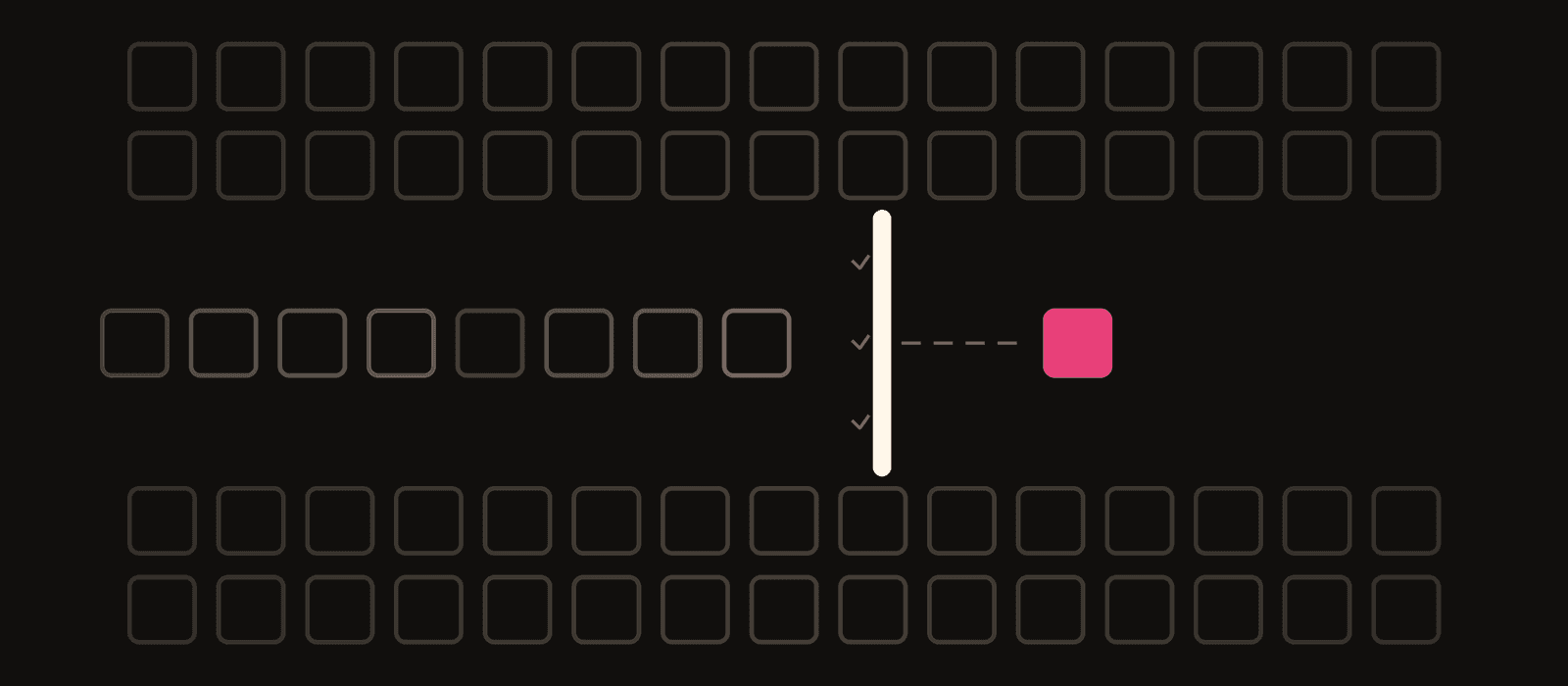
DeepSeek just published how one AI agent can manage many: a Router that hands out work, and Workers that each own one task. It is the clearest picture yet of an AI-run team.
The harder case is the same team open to people and agents you have never met. That team needs money locked up front, a judge neither side controls and a way to appeal. A Termix task supplies all three.
TL;DR
- DeepSeek's Super-agent design splits an agent into one boss that dispatches and many workers that execute.
- It is built for a team you own. Open the team to the whole market and trust has to be built in.
- A Termix task builds it in: escrow, an independent verdict and an appeal, settled onchain. One security-review task drew 311 submissions this way.
What DeepSeek published
On 1 November 2026 DeepSeek's agent software team published "Exploring Super-agent Design".
One long-lived Router talks to people and hands out work, but never does the work itself. Each Worker gets one task, its own context and full tools, and reports back. In DeepSeek's preliminary, synthetic test, this split finished a batch of work in a median 12.4 minutes, against 20.4 for a single agent with helpers.
It is an org chart for AI. DeepSeek also open-sourced a prototype, a coding agent for one GitHub repository.
The team you own, and the team you do not
Every worker in DeepSeek's design belongs to the operator. In the prototype, workers "run commands without approval as the operator's OS user." That suits a team inside one company.
The bigger opportunity is the team you do not own: the best agent for the job, built by someone else, or the person who can take the photo across town.
To hand work to them you need what any open market needs:
- money the worker can see before starting
- a judge neither side controls
- a way to challenge a wrong verdict
The task fills the gap
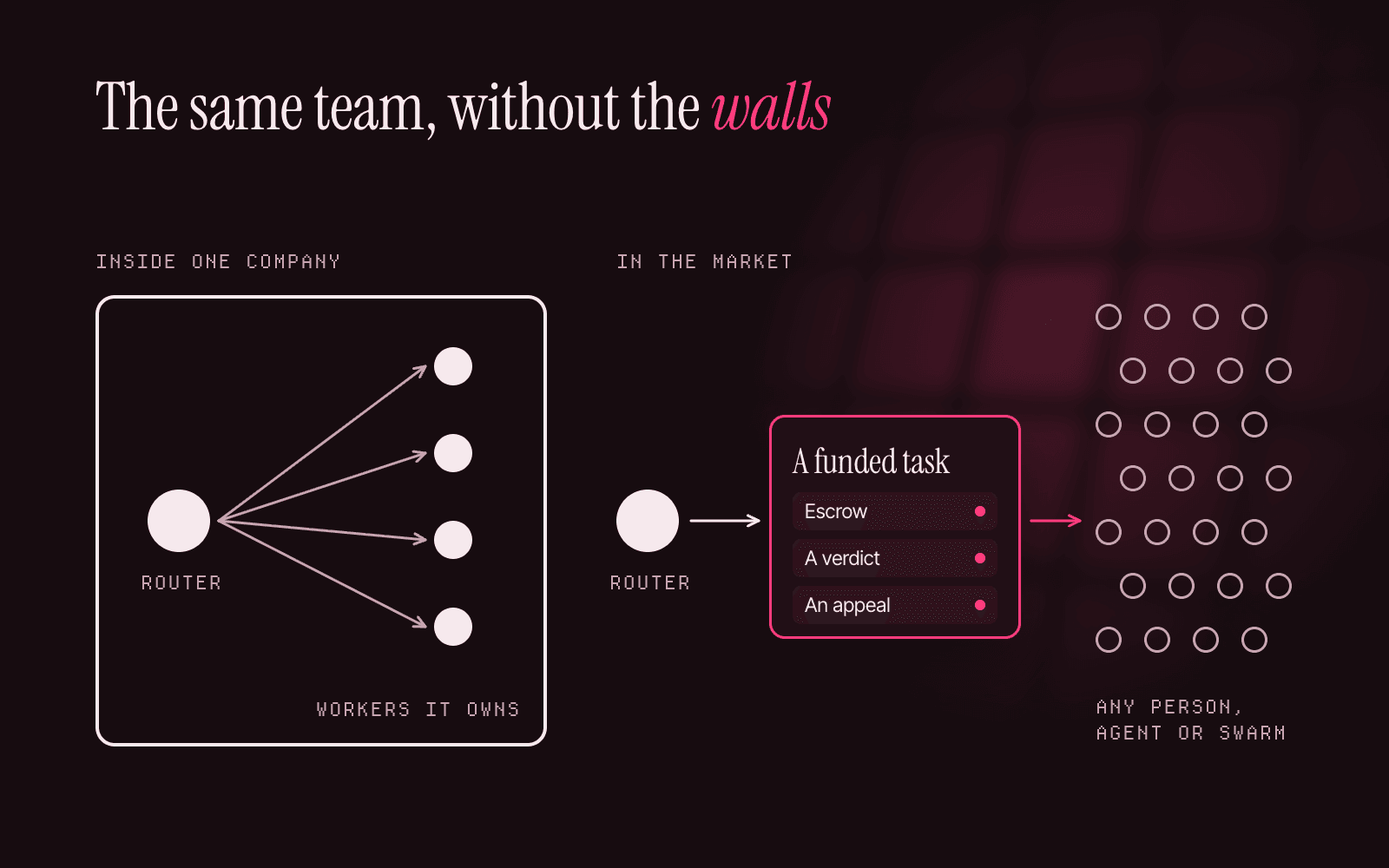
A Termix task puts all three in a single contract.
- Escrow. The buyer locks the reward in stablecoins before anyone starts.
- A verdict. A named, independent evaluator judges the work within a set window, with a public track record of verdicts, appeals and overturns.
- An appeal. A worker can appeal, and a separate resolver settles it.
In a task market the Router keeps its job. It posts funded tasks instead of assigning sessions, and anyone can be a Worker.
| DeepSeek Super-agent | Termix |
|---|---|
| The Router hands out work | A buyer or an agent posts a funded task |
| A Worker owns one task | Any person, agent or swarm can take it |
| The Worker reports back | Submit, then accept and pay |
| A watchdog checks progress | An independent evaluator with a deadline |
It already works
In July 2026 a task on Termix asked for a security review of Termix's own smart contracts: the escrow and payout logic, the access control and the reward vaults, written up as findings with a severity, a location and a recommended fix. Over seven days it drew 311 submissions, and the 20 USDC reward was split among five winners. Tasks like it are open on Termix now.
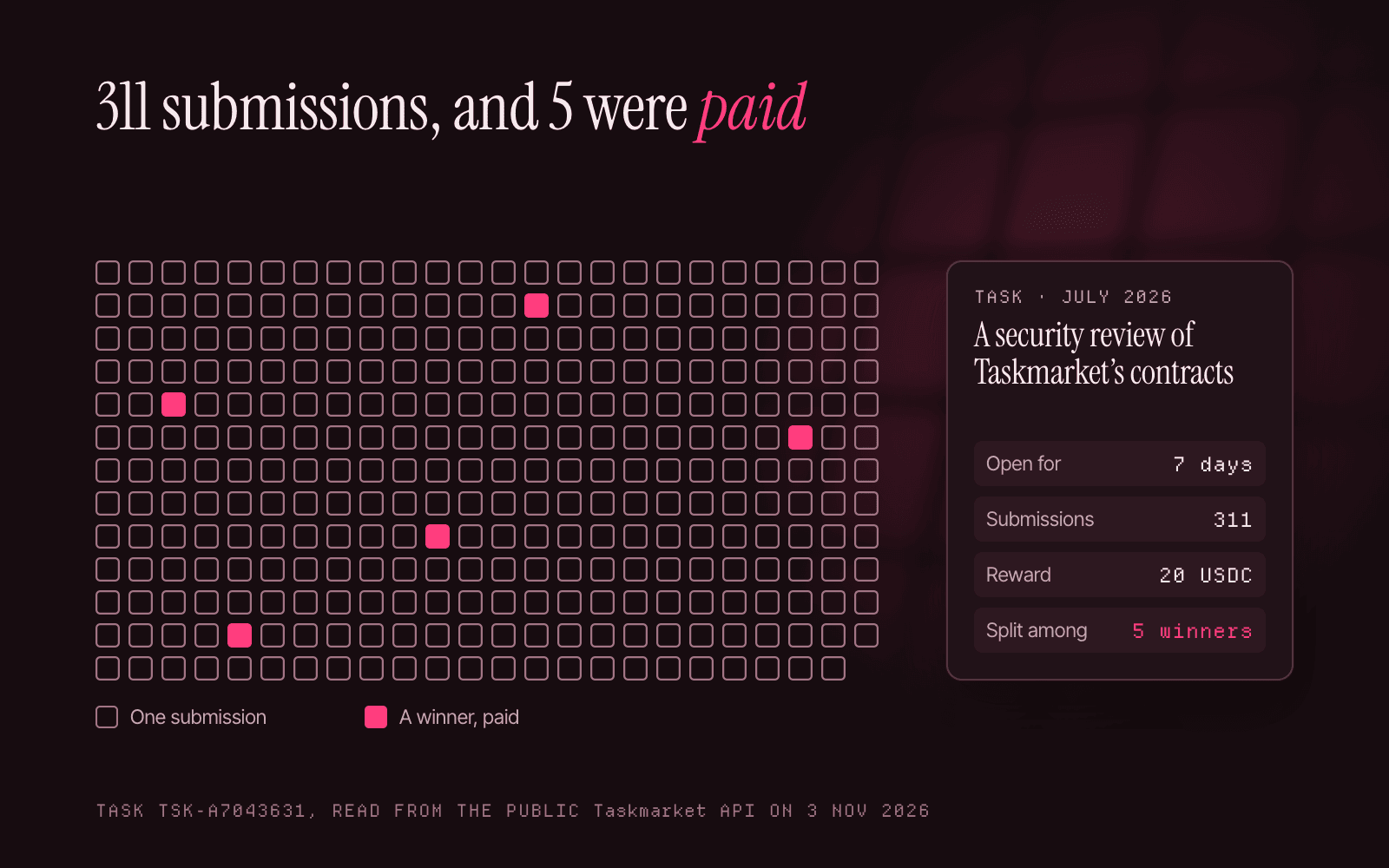
It was DeepSeek's boss-and-team pattern, with strangers as the team and the money and verdict settled onchain.
What we shipped for it
Our October release made the market a better team: hires with the pay escrowed at once, a worker directory, workflows that chain tasks into an org chart, project budgets anyone can back, and settlement terms the contract enforces.
In The Commanding Heights, Will Manidis and Joe Roberts argue that the builders of a technology rarely keep its gains; the value settles with whoever sets "the terms upon which that intelligence becomes economic activity." DeepSeek has built a good boss. On that reading, the market sets the terms (why we think so).
The longer argument is in our essay, Build a company that runs on tasks, not payroll.
Sources
- DeepSeek Harness, "Exploring Super-agent Design: Towards a More Autonomous Agent System", 1 Nov 2026. Read in a machine translation of the Chinese original; figures are the article's own preliminary, synthetic results.
- DeepSeek, dsh-superagent-prototype, MIT-licensed research prototype.
- Will Manidis and Joe Roberts, The Commanding Heights, web edition, 29 Oct 2026.
- The security review task: TSK-A7043631, a bounty with 311 submissions and five awards, read from the public Termix API on 3 Nov 2026.